
Flatbeds vs. Step Deck Trailers
Height limits for trailers and cargo are an important part of the law, allowing for proper clearance for bridges and keeping everyone safe. But what should you do if your cargo exceeds the legal height limits?
In Texas, the maximum height allowed for trailers—and all other vehicles—is 14 feet. Every state has different height limits, so it’s important to confirm them before starting any hauling journey. When it comes time to choose the right trailer for your next haul, there are two popular options: flatbed trailers and step deck trailers.
Selecting the Right Trailer
As can be expected, different trailers are suitable for different needs. Before choosing a trailer, you’ll want to assess your needs and what you’re transporting in order to select the right trailer.
Both flatbed and step deck trailers have the same length and weight limits, usually around 48 to 53 feet long and with a maximum carrying weight of 48,000 pounds. The biggest difference between the two types of trailers is height capabilities, or how tall the equipment you place on the trailer can be without surpassing the legal height limit.
A typical flatbed trailer is 5 feet above the ground, while step decks are lower at 3.5 feet above the ground. As a result, if your cargo surpasses the legal height limit, a step deck trailer would be your best choice. The two levels allow taller cargo to be placed lower to the ground, thus eliminating the problem of height. Otherwise, a traditional flatbed trailer can handle the transport of most machinery, equipment, and tools.
What Is a Flatbed Trailer?
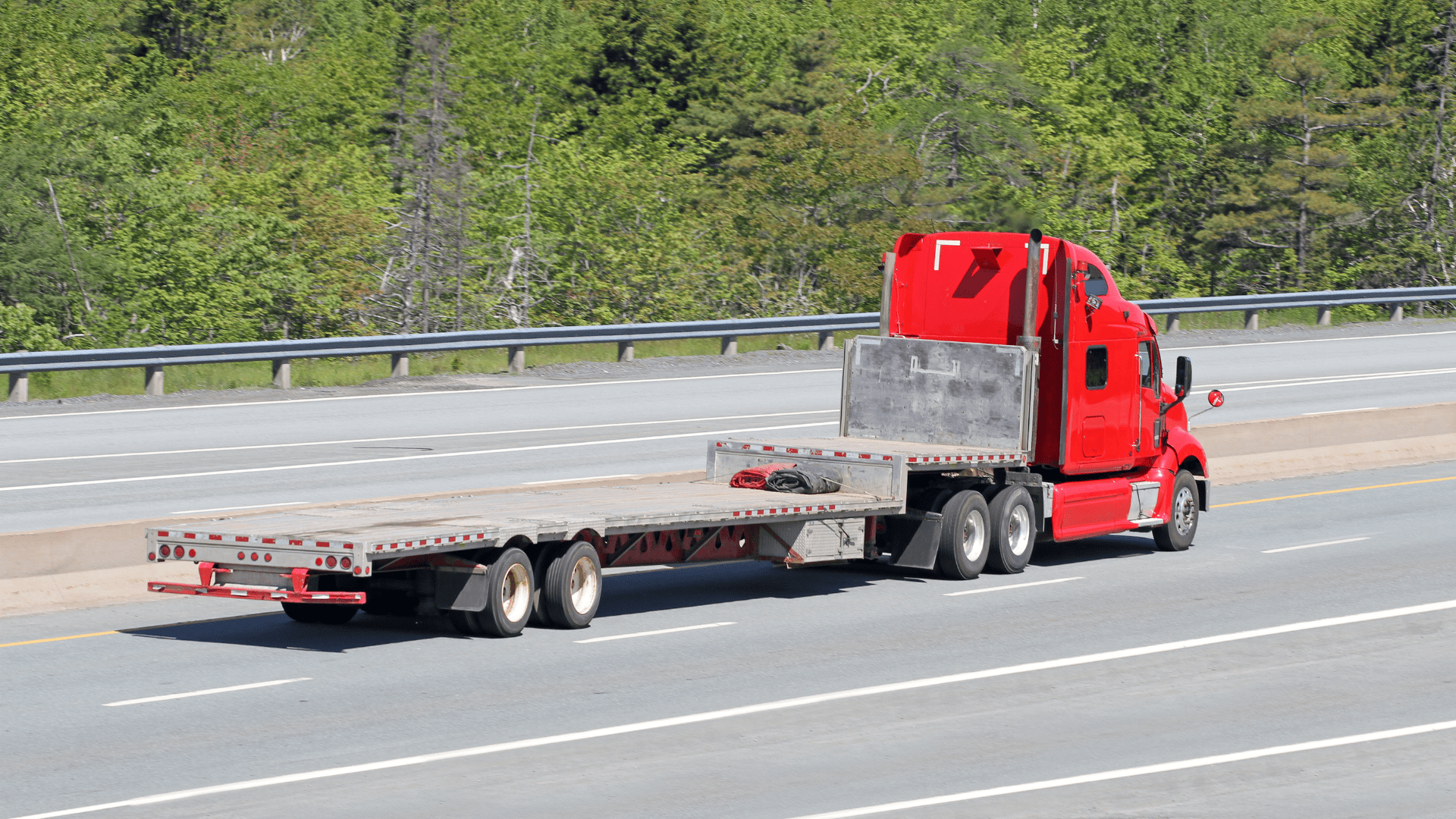
A traditional flatbed trailer lacks sides or a roof, instead being open in order to fit tall or awkwardly sized freight. Flatbeds are used for standard size loads, not oversize, since oversize loads require special permits and often will not fit on a typical flatbed.
Flatbeds are generally made of aluminum, steel, or composite, though there is no discernible difference between the performance of these materials. These options simply allow you to choose your preference. All flatbeds, however, are the same in terms of height and height limits. They rise 5 feet above the ground and can carry loads up to 8.5 feet tall.
Some common equipment that can be hauled on a traditional flatbed include:
- Vehicles
- Raw materials
- Construction materials & equipment
- Lumber
- Heating and cooling units
- Formed concrete
Because of flatbeds’ height limits, equipment that is oversized in either weight or height is not suitable for transport on a conventional trailer. However, if you’re carrying heavier cargo, you can add additional axles to the trailer to help support the weight. Other add-ons include curtain-sided walls, extendable decks, and multilevel decks. Flatbeds are the foundation for step decks and other types of trailers because they have the ability to add extra decks. In fact, multilevel decks are also known as step decks, which leads us to our second type of trailer.
What Is a Step Deck Trailer?
Step deck trailers, also called drop decks or lowboys, are commercial trailers built to carry tall cargo that would exceed the legal height limit if it was on a flatbed. The major difference between these two trailers is the height of the deck. Because step decks have a lower deck rising only 3.5 feet above the ground, they can support taller freight up to 10 feet 2 inches tall.
Step decks are designed differently from flatbeds, with both an upper deck and a lower deck that can carry taller equipment. A ramp is included with many of these trailers for easy load and unload, and the lower deck makes it easier for forklifts to add and remove cargo.
There are a few benefits that come with using a step deck instead of other types of trailers. One benefit is that you can carry tall cargo without going through the process of applying for and obtaining a permit for what would have been considered an oversized load on a traditional flatbed. This also avoids the need for an escort and extra charges for the permit.
A lot of equipment would be considered oversized on a flatbed trailer but not on a step deck. While step decks are not the best for hauling small materials, vehicles, or tools, some common equipment hauled on step decks include:
- Tractors
- Excavators
- Construction and farming materials & equipment
- Machinery
If a regular step deck trailer still isn’t suitable enough to meet your oversized load, the next best option would be a double drop deck trailer, which is used for extra-large and heavy loads.
Call Twisted Nail When You Need a Flatbed or Step Deck Trailer in Texas
If you’re looking to haul equipment or machinery on a trailer, look no further than Twisted Nail. Our professionals can provide you with the best trailer for your needs, whether you’re hauling tall cargo with a step deck trailer or using a traditional flatbed. With a wide range of trailers to choose from in the Waco, Bryan, and Austin areas of Texas, we’ve got you covered. If you’re ready to speak with one of our experts about starting your trailer journey with us, or if you have questions about the process, contact us today. We’ll be happy to work with you!
